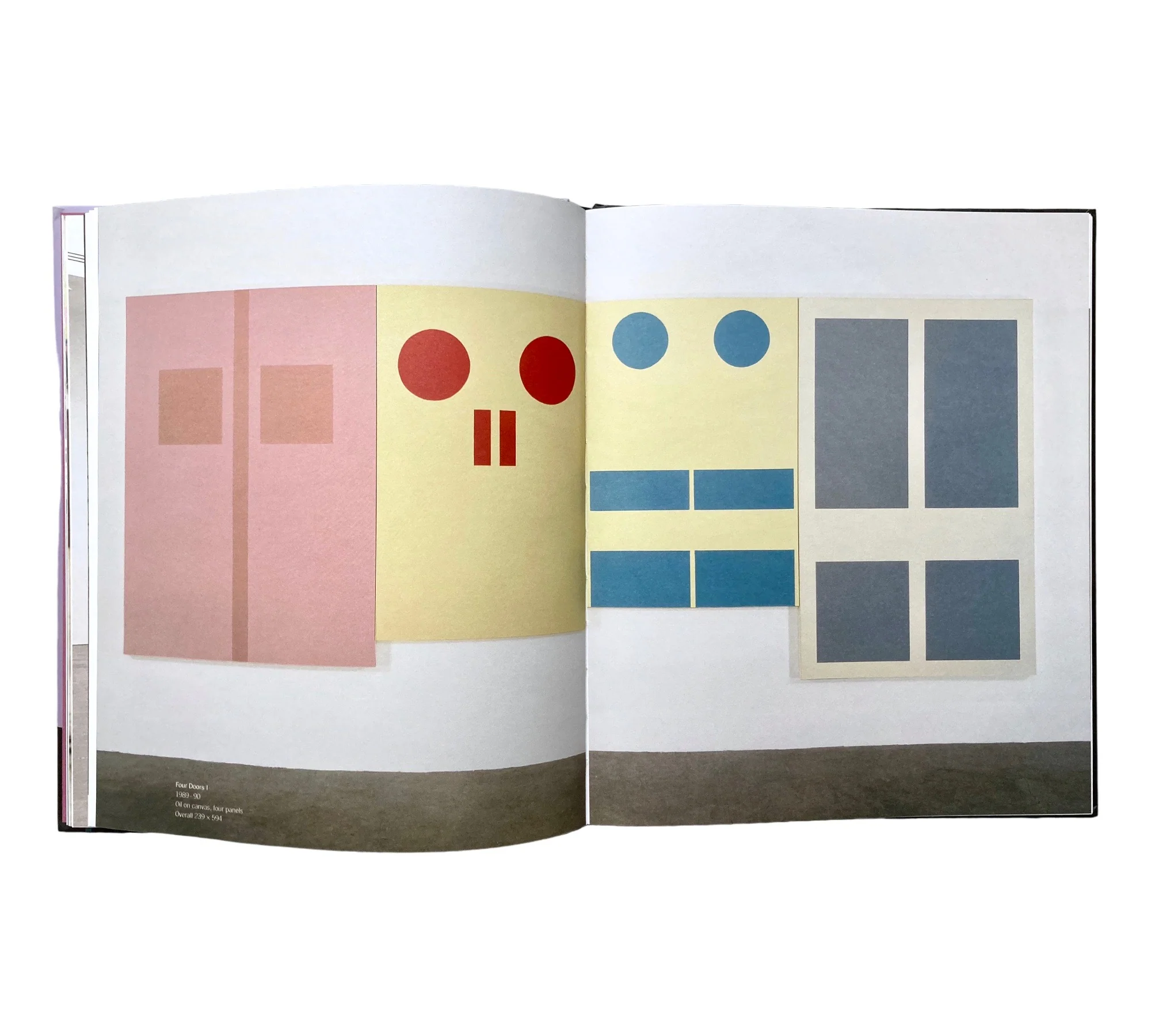

Josef Albers: Life and Work
Charles Darwent
Hardcover | 17.27 x 3.81 x 24.89 cm | 352 pp
Thames & Hudson | 2018 | 9780500519103
While Josef Albers’ Bauhaus colleagues Klee and Kandinsky are household names, Albers himself has remained inscrutable. He is best known as the painter of the Homages to the Square, a series of over 2,000 seemingly tightly controlled experiments in the interaction of colour. Yet he did not begin these pictures until he was in his sixties, already several decades into his career as an artist, maker and theorist, much of it pursued in the United States following the Nazi dissolution of the Bauhaus in 1933.
Misunderstanding of the Homages reflects a wider misreading of Albers’ life and work. Married to the textile artist Anni Albers, his papers include letters from fellow artists John Cage, Robert Rauschenberg, Richard Serra and Eva Hesse; colleagues such as Buckminster Fuller and Philip Johnson; and fans and collectors ranging from the composer Virgil Thomson to the cartoonist Saul Steinberg. If his network of influence was surprisingly wide, so, too, were his interests. Albers started life at the Bauhaus as a glassmaker, ran their renowned wallpaper workshop, and designed furniture that is still in production eighty years later. He pioneered the study of colour at Black Mountain College, organised its famed ‘Summer Sessions’ with guest tutors from Willem de Kooning to Merce Cunningham, and went on to head the design department at Yale.
Drawing on extensive unpublished writings, documents and illustrations, Charles Darwent offers a broad view of not only the artistic and political currents, but also the friendships and rivalries that formed the backdrop to Albers’ creative output.
Charles Darwent
Hardcover | 17.27 x 3.81 x 24.89 cm | 352 pp
Thames & Hudson | 2018 | 9780500519103
While Josef Albers’ Bauhaus colleagues Klee and Kandinsky are household names, Albers himself has remained inscrutable. He is best known as the painter of the Homages to the Square, a series of over 2,000 seemingly tightly controlled experiments in the interaction of colour. Yet he did not begin these pictures until he was in his sixties, already several decades into his career as an artist, maker and theorist, much of it pursued in the United States following the Nazi dissolution of the Bauhaus in 1933.
Misunderstanding of the Homages reflects a wider misreading of Albers’ life and work. Married to the textile artist Anni Albers, his papers include letters from fellow artists John Cage, Robert Rauschenberg, Richard Serra and Eva Hesse; colleagues such as Buckminster Fuller and Philip Johnson; and fans and collectors ranging from the composer Virgil Thomson to the cartoonist Saul Steinberg. If his network of influence was surprisingly wide, so, too, were his interests. Albers started life at the Bauhaus as a glassmaker, ran their renowned wallpaper workshop, and designed furniture that is still in production eighty years later. He pioneered the study of colour at Black Mountain College, organised its famed ‘Summer Sessions’ with guest tutors from Willem de Kooning to Merce Cunningham, and went on to head the design department at Yale.
Drawing on extensive unpublished writings, documents and illustrations, Charles Darwent offers a broad view of not only the artistic and political currents, but also the friendships and rivalries that formed the backdrop to Albers’ creative output.
Original: $20.13
-65%$20.13
$7.05Description
Charles Darwent
Hardcover | 17.27 x 3.81 x 24.89 cm | 352 pp
Thames & Hudson | 2018 | 9780500519103
While Josef Albers’ Bauhaus colleagues Klee and Kandinsky are household names, Albers himself has remained inscrutable. He is best known as the painter of the Homages to the Square, a series of over 2,000 seemingly tightly controlled experiments in the interaction of colour. Yet he did not begin these pictures until he was in his sixties, already several decades into his career as an artist, maker and theorist, much of it pursued in the United States following the Nazi dissolution of the Bauhaus in 1933.
Misunderstanding of the Homages reflects a wider misreading of Albers’ life and work. Married to the textile artist Anni Albers, his papers include letters from fellow artists John Cage, Robert Rauschenberg, Richard Serra and Eva Hesse; colleagues such as Buckminster Fuller and Philip Johnson; and fans and collectors ranging from the composer Virgil Thomson to the cartoonist Saul Steinberg. If his network of influence was surprisingly wide, so, too, were his interests. Albers started life at the Bauhaus as a glassmaker, ran their renowned wallpaper workshop, and designed furniture that is still in production eighty years later. He pioneered the study of colour at Black Mountain College, organised its famed ‘Summer Sessions’ with guest tutors from Willem de Kooning to Merce Cunningham, and went on to head the design department at Yale.
Drawing on extensive unpublished writings, documents and illustrations, Charles Darwent offers a broad view of not only the artistic and political currents, but also the friendships and rivalries that formed the backdrop to Albers’ creative output.